Sterilization & Infection Control · Buying Guide
Autoclaves: Class Mismatch Is the Real Sterilization Risk, Not Age
A newer unit doesn't fix a class-to-load mismatch, and it doesn't run its own spore test. The risk that actually gets practices flagged sits elsewhere.
Key takeaways
- The failure that gets flagged in an inspection is running wrapped, hollow, or lumened instruments through a Class N or S autoclave, which can't guarantee steam penetration, regardless of age.
- CDC dental infection-control guidance calls for spore testing at least weekly, and with every load containing an implantable device. A missed week is a bigger liability than an old machine.
- A positive spore test triggers an escalation protocol: pull the unit, retest immediately, and if the retest is also positive, recall items back to the last negative test and hold the unit out of service until three consecutive full-load tests pass.
- On a refurbished unit, the real red flag is missing paperwork, not the manufacture date. Ask for documented diagnostic-cycle results, calibration data, and spore-test proof before buying, new or refurbished.
- Size the chamber from instrument volume, not chair or bed count. Two practices with the same footprint can carry very different sterilization loads.
Most buyers shop for an autoclave like any capital equipment: newer is safer, bigger budget buys more protection. That instinct is understandable, and it's wrong. Infection-control citations trace to two preventable causes: running a load through a sterilizer class it was never built for, and skipping the biological testing that would have caught a problem first. Neither has anything to do with the unit's age.
A brand-new Class B sterilizer nobody spore-tests is not safer than a well-documented refurbished unit matched to its loads. A positive spore test isn't just a failed inspection line item; it can mean pulling the machine from service and recalling every load sterilized since the last clean test. That's the thread this guide follows: match the class to the load, verify the paperwork, keep the testing log current. That's what determines risk, not the year stamped on the unit.
What an autoclave actually does
An autoclave sterilizes reusable instruments using pressurized steam, typically 121 to 134 degrees Celsius, held long enough to destroy bacteria, viruses, fungi, and resistant spores, a higher bar than chemical disinfection or dry heat, which both struggle to reach every surface of a complex instrument, not just its outside. Steam-under-pressure is the standard in dental, physician, surgical, veterinary, and dermatology settings for that reason. The question that separates a good purchase from a bad one isn't whether to buy an autoclave; it's which class the instrument mix requires.
The EN 13060 class system, and the testing rule that goes with it
Class N (gravity): removes air by gravity alone, no vacuum step. Per manufacturer RAYPA, Class N units "are not suitable for sterilizing items with deep cavities, porous materials, or packaged instruments," since gravity can't guarantee steam penetration on complex surfaces. Solid, unwrapped instruments only.
Class S: adds a limited vacuum step, handling simple cavities and light packaging. A middle tier, not a substitute for Class B on anything wrapped or hollow.
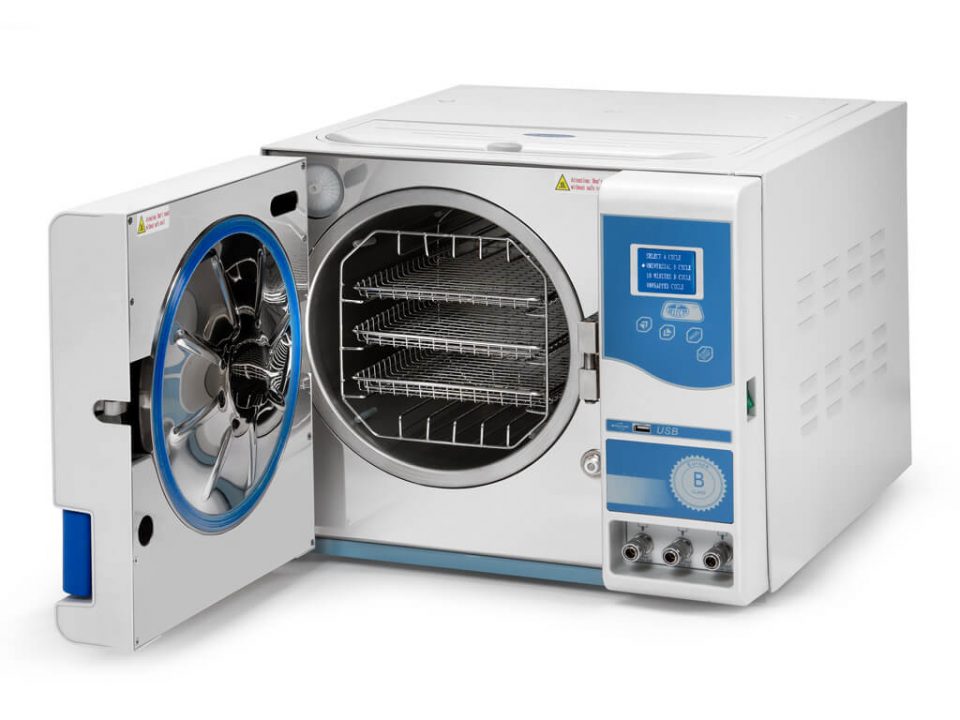
Class B (pre-vacuum): the only class built for full air removal, validated for porous, wrapped, hollow, or lumened loads.
Running a wrapped or hollow load through a Class N or S unit is a live sterility risk regardless of the machine's age or cost. Trapped air blocks steam from reaching the load.
Class selection is only half of it. CDC guidance on sterilization monitoring requires spore testing at least weekly, using a biological indicator and matched control from the same lot. Any load with an implantable device needs its own spore test, and implantable items should ideally be held until that test comes back negative.
The protocol for a positive result is where the real stakes show up. A single positive test doesn't automatically mean the sterilizer is broken if mechanical and chemical indicators looked normal, but it triggers a sequence: pull the unit from service, review procedures for operator error, quarantine any implantable items and hold them until they're shown sterile (non-implantable items don't automatically need recall at this stage), and immediately re-run a spore test on the same cycle. If that retest comes back negative, the unit returns to service. If the retest is also positive, that's a confirmed failure: the unit stays out of service until it's inspected or repaired and passes three consecutive full-load spore tests, and items from suspect loads dating back to the last negative spore test should be recalled, rewrapped, and re-sterilized.
Put those two facts together and the thesis follows: a Class B unit sitting unused because nobody spore-tests it weekly is not meaningfully safer than a documented Class N or S unit loaded only with instruments it's rated for. Class-to-load fit and testing discipline are the compliance surface, not the invoice date.
Chamber size, class, and price by practice scale
Chamber size and price correlate loosely with practice scale, but they're a starting point for narrowing options, not the variable that should drive the purchase. The table below uses illustrative ranges; confirm current pricing with a seller, since it moves and varies by market.
| Practice scale | Chamber size | Recommended class | New price band | Refurbished price band |
|---|---|---|---|---|
| Solo / 1–2 operatory | 18–22L | Class N if unwrapped-only workflow; Class B if any wrapped or hollow instruments | Class N: $2,000–$5,000 | Meaningfully below new — get current numbers from the seller |
| 2–4 operatory, mixed procedures | 22–40L | Class B (near-mandatory once hollow or surgical instruments enter rotation) | Class B: $4,000–$10,000+ ($4,000–$7,000 standard; $7,000–$10,000+ for USB-logging or rapid-cycle models) | Meaningfully below new — get current numbers from the seller |
| High-volume / multi-provider / surgical | 40L+ or multiple units | Class B, data-logging strongly recommended | $10,000+ | Case by case; verify documentation before buying |
Cycle time runs roughly 20 to 30 minutes unwrapped and 40 minutes or more wrapped, plus 10 to 15 minutes load and unload time either way. Tuttnauer's cost guide splits Class B into two tiers: standard pre-vacuum units at $4,000 to $7,000, and higher-end USB-logging or rapid-cycle units at $7,000 to $10,000 or more. Confirm current figures before purchase.
Sizing correctly: instrument volume, not chair count
The most common sizing mistake is estimating capacity from the number of chairs or exam rooms. It's intuitive, and it produces wrong answers reliably. A two-chair oral surgery practice generates far more sterilization demand than a two-chair orthodontic practice with the same footprint, since instrument turnover per patient isn't close. Chair count says nothing about what's going through the chamber.
A more reliable method works from instrument volume directly:
- Estimate instruments per patient by procedure type: roughly 2 to 4 for hygiene, 6 to 10 for restorative work, 10 or more for surgical procedures.
- Multiply that figure by expected daily patient volume for a peak daily instrument count.
- Apply a 1.25 to 1.75 times safety multiplier for turnover buffer, no-shows, and same-day add-ons.
- Cross-check against realistic cycle time (wrapped versus unwrapped) plus load and unload overhead, to confirm the chamber can turn over enough cycles in an operating day.
Undersizing reproduces the same failure mode as a class mismatch: staff under time pressure overload trays past rated capacity, blocking steam penetration, or rush cycles and skip documentation to keep pace. A sizing error and a compliance error aren't separate problems; they compound each other.
New versus refurbished: the decision that actually matters
Reframe the new-versus-refurbished decision away from "new is safe, refurbished is risky" and toward what actually predicts outcomes: what can the seller document? A brand-new unit still needs the correct class for the practice's real instrument mix, and still needs a spore-testing log started on day one. Buying new doesn't exempt a practice from the CDC protocol above; an undocumented new unit carries the same risk as an undocumented used one.
On the refurbished side, the real warning sign isn't age, it's absence of paperwork. A legitimately remanufactured autoclave should come with calibration data confirming it holds sterilization temperature, and written proof of a passed biological indicator test performed before it leaves the refurbisher, not just a "wiped down and inspected" claim. A seller should also describe what was actually replaced (gaskets, seals, valves, solenoids) versus only cleaned. This same documentation-first logic applies to other capital equipment, not just autoclaves.
Asking for that documentation is the single most important question a buyer can ask, new unit or refurbished. A seller who can't produce spore-test and calibration records is the actual red flag this guide is about, independent of manufacture date. Sellers who carry both new and refurbished equipment, iMedSales among them, can walk buyers through that documentation on either path rather than defaulting to "buy new" as the only safe answer.
A Class B sterilizer nobody spore-tests is not a safer purchase than a documented refurbished unit correctly matched to its loads. Class fit and testing discipline are the compliance surface. The invoice date isn't. Editor's note
A maintenance note: cycle-time creep and water quality
One practical pattern worth flagging: a cycle time creeping more than roughly 10% above baseline is often the first sign of mineral-scale buildup from non-distilled water, not a mechanical fault. Tap, filtered, or spring water carry dissolved minerals that deposit as scale inside the chamber, forcing the unit to work harder to hold temperature. Use distilled or de-mineralized water per manufacturer spec, and track baseline cycle time so creep is obvious early.
Buyer checklist
- Confirm the instrument mix. Wrapped, hollow, or lumened instruments mean Class B; Class N or S only for solid, unwrapped loads.
- Size the chamber from instrument-volume math, not chair or bed count, using the formula above.
- On refurbished units, request diagnostic-cycle, calibration, and spore-test proof before purchase, not a "fully inspected" claim.
- Confirm cycle time against real daily patient volume, including load and unload overhead.
- Set a weekly spore-testing routine on day one, new or refurbished.
- Use distilled water only, and log baseline cycle time to catch scale buildup early.
- Confirm data-logging or USB export capability for audit-ready records.
Frequently asked questions
How often does an autoclave need to be spore tested?
At least weekly, per CDC dental infection-control guidance, using a biological indicator and matched control from the same lot. Any load with an implantable device needs its own spore test, and implantable items should ideally be held until a negative result confirms sterility.
What's the difference between a Class N and Class B autoclave?
Class N uses gravity displacement to remove air and is rated for solid, unwrapped instruments only. Class B uses a full pre-vacuum cycle to remove air completely, which is what validates it for wrapped, porous, and hollow or lumened loads. A wrapped load in a Class N unit risks trapped air blocking steam penetration.
Is a refurbished autoclave safe to use?
Yes, provided the seller can produce documented proof of successful diagnostic cycles, calibration data confirming the unit holds sterilization temperature, and a passed biological indicator test performed before sale. The real risk indicator is missing documentation, not the unit's age.
What size autoclave does a dental practice need?
It depends on instrument volume, not chair count. Estimate instruments per patient by procedure type, multiply by expected daily patient volume, and apply a 1.25 to 1.75 times safety multiplier, then confirm the chamber can turn over enough cycles per day including load and unload time.
Why is my autoclave's cycle time getting longer?
A cycle time more than about 10% above baseline is often an early sign of mineral-scale buildup from non-distilled water rather than mechanical failure. Switching to distilled or de-mineralized water per manufacturer spec, and tracking baseline cycle time, catches this before it becomes a larger service issue.
Match the class to the load, verify documentation on any unit regardless of age, and keep the spore-test log current. That combination, not the year on the label, determines compliance risk. Weighing a new Class B console and a certified refurbished one against that documentation standard, not age or price, is what protects patients and the inspection record. iMedSales lists both new and professionally refurbished equipment across its product categories, ships worldwide, and offers a price-match guarantee, one place to compare both paths.
Sources
- Centers for Disease Control and Prevention. Sterilization Monitoring, Dental Infection Prevention and Control FAQs. Accessed August 2026.
- RAYPA. Autoclave Classes: Differences Between Class S, N, and B. Accessed August 2026.
- Tuttnauer. Autoclave Cost Guide for Dental, Medical, Hospital, and Laboratory Settings. Accessed August 2026.
- DentalChairRepair.com. The Refurbished Autoclave Buying Guide: How to Save Money Without Compromising Sterilization Safety. Accessed August 2026.
- FSR/OSON. Sizing Autoclaves for Dental Clinics and Autoclave Maintenance Mistakes. Accessed August 2026.