A mid-tier video colonoscope from Olympus or Fujifilm lists for $15,000 to $30,000 new. A fully functional, refurbished version of the same model can clear inspection and full warranty for $4,000 to $9,000. That difference, multiplied across a four-room GI suite, often pays for another piece of capital equipment outright.
Yet most outpatient GI centers default to new equipment, partly out of habit, partly from uncertainty about what "refurbished" actually means in the endoscopy context. This article walks through the real cost math, what separates a safe buy from a liability on a used flexible endoscope, and how the new-vs.-refurbished calculus shifts when you get to automated endoscope reprocessors (AERs).
Types of GI Endoscopy Equipment
A working GI suite is not one piece of equipment -- it is a system of components that need to be matched, maintained, and reprocessed as a unit. Purchasing decisions made in isolation (e.g., buying refurbished scopes but not considering processor compatibility) create downstream headaches. Here is what the full equipment picture looks like.
Flexible Endoscopes (Scopes)
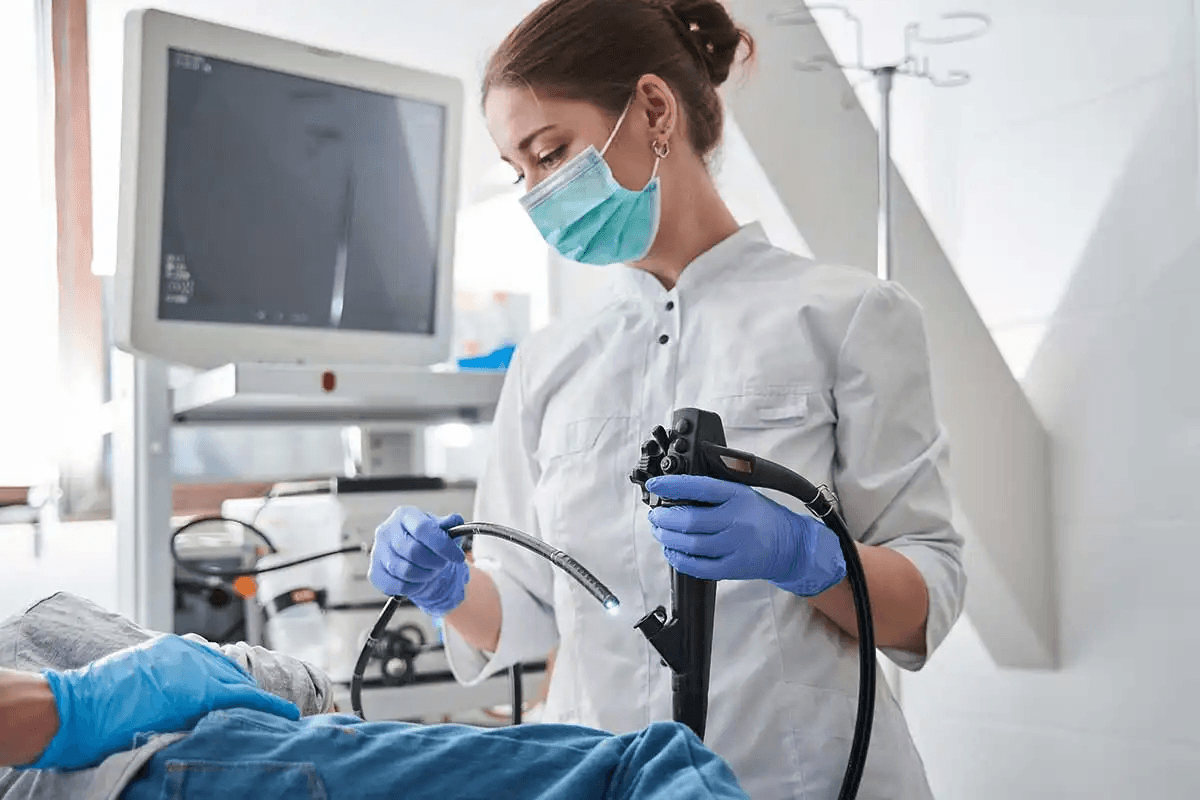
The flexible endoscope is the primary instrument. Each scope type is designed for a specific anatomical range and procedure:
- Gastroscope (EGD scope): Used for esophagogastroduodenoscopy. Typical insertion tube outer diameter is 8.6-10 mm with a 2.8 mm instrument channel. Diagnostic models differ from therapeutic models, which carry a larger 3.7 mm channel to accommodate tools like snares or clips. Key Olympus models include the GIF-HQ190 and GIF-1200N; Fujifilm offers the EG-760 series.
- Colonoscope: Reaches the full colon and may extend to the terminal ileum. Insertion tube length is typically 133-168 cm. Channel diameters range from 3.2 mm (diagnostic) to 3.7 mm (therapeutic). Olympus CF-HQ190 and Fujifilm EC-760 colonoscopes are common reference points in procurement discussions.
- Sigmoidoscope: A shorter (60-70 cm) scope for left-side colon examination. Less common as a standalone purchase as colonoscopes cover the same territory.
- Duodenoscope: Side-viewing scope used for ERCP procedures. The elevator mechanism, which gives it therapeutic capability, also makes reprocessing more complex. FDA has issued specific reprocessing guidance for duodenoscopes given their documented role in infection transmission.
- Enteroscope: Used for deep small-bowel evaluation. Longer, more specialized, and generally lower-volume purchase for most GI centers.
Scope designations follow a naming convention where letters identify scope type (G=gastroscope, C=colonoscope, D=duodenoscope) and numbers indicate the external diameter of the insertion tube in French. Understanding this convention helps when comparing models from different generations or manufacturers.
Video Processors and Light Sources
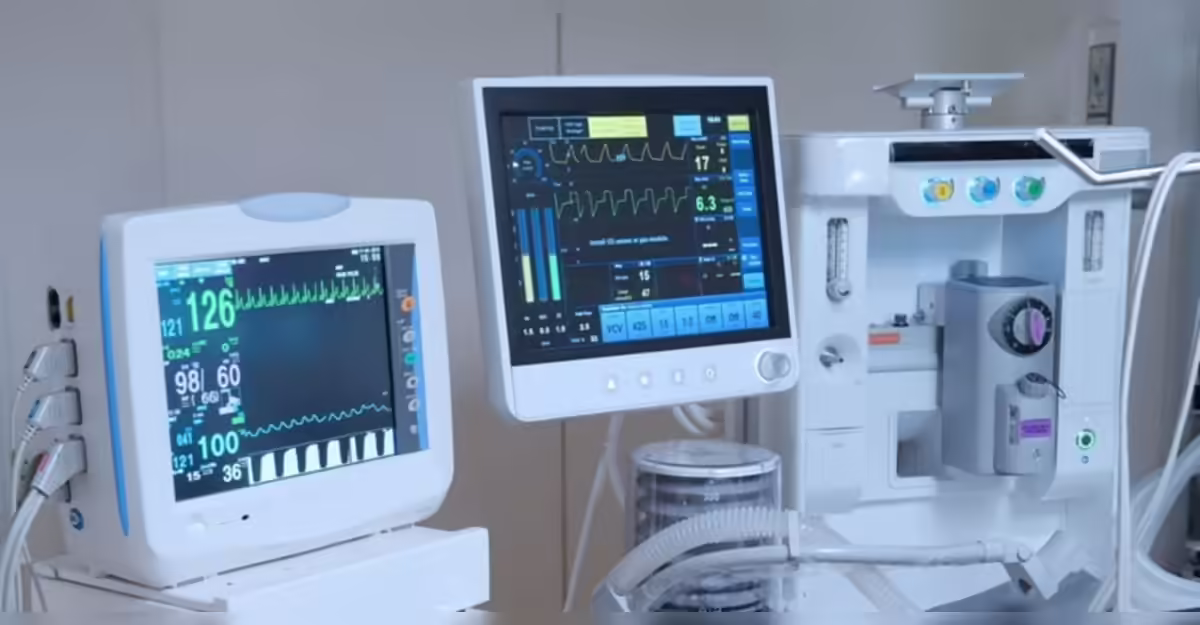
The video processor (also called a video system center) receives the signal from the scope's camera chip and renders it on the monitor. Most processors are platform-specific: an Olympus CV-190 processor, for example, will not drive a Fujifilm scope. When mixing scope and processor generations -- common in refurbished configurations -- compatibility verification is the first step.
Current-generation platforms include the Olympus EVIS X1 (CV-1500, launched in the U.S. in late 2023), which combines video processor and LED light source in a single unit. Previous generations -- the Exera III (CV-190) and Exera II (CV-180) -- remain widely used in outpatient settings and are well-supported by the refurbished market.
Automated Endoscope Reprocessors (AERs)
AERs automate the high-level disinfection cycle after manual pre-cleaning. Major platforms include the Medivators (STERIS) Advantage Plus and DSD Edge, Olympus OER-Elite, and Cantel Medical units. AERs are generally the least visible item in a GI suite budget but carry significant regulatory weight -- a malfunctioning or improperly used AER is a direct patient safety risk. Their reprocessing requirements also factor into how you evaluate refurbished AERs, which is covered separately below.
Accessories and Consumables
Biopsy forceps, snares, injection needles, hemostasis clips, and polypectomy devices are largely single-use and do not factor into new-vs.-refurbished capital decisions. Water bottles, irrigation pumps, and scope storage/drying cabinets are durable goods where used options may be appropriate. Anti-fog solutions for surgical scopes and related accessories are separate consumable considerations during scope maintenance.
New vs. Refurbished GI Endoscopy Equipment: The Real Cost Comparison
Most published "cost comparisons" in this space stop at the sticker price. The more useful frame is total cost of ownership over 5-7 years, which includes purchase price, service contract or per-incident repair, training, and compatibility with your existing infrastructure.
New GI Endoscopy Equipment: Price Anchors
List prices for new GI endoscopy equipment are not publicly posted by major manufacturers (Olympus, Fujifilm, Pentax/Hoya) -- they quote through sales reps, and prices vary by volume, contract structure, and region. However, market data from secondary sellers gives reliable price anchors:
| Equipment | Typical New List Range | Notes |
|---|---|---|
| Olympus EVIS X1 CV-1500 (processor + light source) | $30,000 - $55,000+ | Current-generation; launched U.S. Oct 2023 via Olympus press release |
| Olympus CF-HQ190 video colonoscope | $18,000 - $28,000 | EVIS Exera III generation; HD imaging |
| Olympus GIF-HQ190 video gastroscope | $15,000 - $22,000 | EVIS Exera III generation |
| Fujifilm EC-760 series colonoscope | $14,000 - $24,000 | Includes optical multi-zoom and CMOS digital signal |
| Olympus OER-Elite AER | $35,000 - $50,000 | Single-basin; replaces OER-Pro platform |
| Medivators Advantage Plus AER | $30,000 - $45,000 | Per AORN pricing comparisons from prior procurement surveys; contact STERIS for current |
| Complete 2-scope video system (processor + 2 scopes) | $60,000 - $120,000 | Wide range depending on scope types and generation |
For a four-room outpatient GI suite requiring 8-10 colonoscopes, 4-6 gastroscopes, two or more processors, monitors, and 4 AER basins, total new-equipment capital outlay commonly runs $400,000 to $700,000 or more before service contracts.
Refurbished GI Endoscopy Equipment: Price Anchors
Refurbished pricing data from active secondary markets shows consistent patterns. Savings against new list prices typically run 40-60% for scopes and 30-50% for processors when purchasing from an established refurbisher:
| Equipment | Typical Refurbished Range | Source Type |
|---|---|---|
| Refurbished video colonoscope (CV-180/190-compatible) | $4,000 - $9,000 | Certified refurbisher or marketplace (e.g., MD Endoscopy) |
| Refurbished video gastroscope | $2,000 - $6,500 | Certified refurbisher or marketplace |
| Olympus CV-180 processor (refurbished) | $3,500 - $8,000 | Dependent on included light source; per market listings |
| Olympus CV-190 processor (refurbished) | $7,000 - $14,000 | More recent generation; lower supply |
| Complete refurbished 2-scope video system | $15,000 - $35,000 | Processor + light source + 2 scopes |
| Refurbished AER (Medivators Advantage 2.0 / DSD Edge) | $10,000 - $22,000 | STERIS Certified Pre-Owned or independent vendor; per MedServiceRepair |
Where the Math Gets More Complicated
Purchase price is only part of the picture. Consider these factors before finalizing a new-vs.-refurbished decision:
- Service contracts: New scopes from Olympus or Fujifilm typically carry a 1-year parts warranty and access to OEM service agreements. Refurbished scopes from reputable vendors come with 6-12 month warranties and access to third-party repair networks. Annual repair costs for a colonoscope in active clinical use average $1,000-$3,000 depending on use volume and handling practices. Independent repair is generally 20-40% less than OEM repair -- see the OEM vs. independent refurbished guide for a full breakdown of service tradeoffs.
- Technology generation: The Olympus CV-180 (Exera II) and CV-190 (Exera III) processors remain FDA-cleared for clinical use. A facility that does not require AI-assisted detection features (like those on the EVIS X1) loses nothing clinically relevant by operating a CV-190 system. For most standard screening and diagnostic GI procedures, Exera III generation equipment performs at a level indistinguishable to patients.
- Scope compatibility: Older processors may not support current-generation scopes. Confirm processor-scope compatibility before purchase -- especially when mixing brands or generations.
- Depreciation and replacement cycles: New equipment depreciates 30-40% in the first two years. A facility buying near-end-of-generation new scopes (e.g., Exera III while EVIS X1 is the current platform) is, in effect, buying refurbished at new prices.
For surgery centers and smaller GI practices, the arithmetic consistently favors refurbished on standard diagnostic scopes, while new may make sense for high-volume therapeutic suites or facilities where AI-imaging features are a clinical priority. More on this framework is available in the broader guide to buying medical equipment for surgery centers.
What to Inspect on a Refurbished Endoscope
Not all refurbished endoscopes are equivalent. "Refurbished" can mean anything from a cosmetic cleaning to a full component replacement with quality-control testing. When evaluating a used or refurbished flexible endoscope, separate cosmetic from functional issues -- only functional defects affect patient safety and reprocessing reliability.
Functional Inspection Points (Non-Negotiable)
These must be verified before accepting any refurbished scope:
- Image quality: Connect to a compatible processor. Check for dead pixels, color imbalance, and uneven brightness. White balance calibration should complete without errors. A scope with image artifacts is not repairable in the field.
- Angulation: Confirm full up/down and left/right deflection at the distal tip using the control knobs. Both axes should deflect smoothly, without resistance or asymmetry. Most colonoscopes deflect up to 180 degrees up and 160 degrees down -- confirm against the manufacturer's spec sheet for the specific model.
- Leak test: Perform a dry leak test using a video endoscope tester or manometer, then a wet leak test by submerging the scope while pressurized. Bubbles indicate a breach in the external sheath. Any leak is a disqualifier. Per ANSI/AAMI ST91:2021 -- the governing standard for flexible endoscope processing in healthcare facilities -- scopes must pass a leak test at every step of the reprocessing cycle.
- Channel patency: Pass a cleaning brush through all instrument channels. Restriction or resistance indicates a blockage or collapsed channel wall.
- Light transmission: Compare light output at the distal tip against a reference scope. Degraded fiber-optic bundles or a failing light guide connector reduce procedural visibility.
- Elevator mechanism (duodenoscopes only): Confirm the elevator raises and lowers freely, resets without sticking, and that the surrounding cap area is intact. Given the FDA's documented concerns about infection transmission from elevator channel contamination, any duodenoscope should be evaluated against the specific FDA reprocessing guidance for duodenoscopes before purchase.
Cosmetic Issues: What to Accept and What to Flag
Cosmetic damage is common on used scopes and does not automatically disqualify a unit -- but it requires evaluation based on whether it affects cleanability:
| Finding | Impact | Decision |
|---|---|---|
| Surface scuff marks on insertion tube | Cosmetic only | Acceptable if sheath is intact |
| Minor wear on control knob grip | Ergonomic, not functional | Acceptable |
| Peeling or cracking of insertion tube sheath | Affects cleanability and leak integrity | Requires repair or rejection |
| Scratched or hazed distal lens | Degrades image quality | Requires lens replacement before use |
| Tape patches on insertion tube | Masks sheath damage; creates cleaning gap | Rejection criterion |
| Corrosion on light guide connector pins | Electrical and functional risk | Rejection criterion |
| Stiffness in bending section | May indicate internal cable wear | Requires internal inspection |
ANSI/AAMI ST91:2021 recommends using at least 5x magnification when inspecting the distal end of flexible endoscopes, and 10x magnification specifically for duodenoscopes. A refurbisher who does not use lighted magnification inspection is not meeting the current standard, which is a red flag about their overall process quality.
Ask the Refurbisher These Questions
- How many quality-control checkpoints does the scope pass before shipping?
- Is the refurbishment OEM-parts-based or third-party-parts-based, and for which components?
- What warranty is provided, and does it cover both parts and labor?
- Can you provide documentation of the scope's reprocessing and repair history?
- Does the scope ship with a passed leak test certificate?
For more detail on what warranty terms to expect -- and what language to watch for in the fine print -- see the guide to warranties on refurbished medical equipment.
Endoscope Reprocessing Equipment (AERs): New vs. Used Considerations
The new-vs.-refurbished decision is more nuanced for AERs than for scopes. An AER is not just a capital asset -- it is a safety-critical piece of infection control infrastructure. Get this wrong and the scope itself is irrelevant.
Why AER Procurement Carries Different Risk
Flexible endoscopes carry a documented infection transmission risk when reprocessing is inadequate. The CDC's HICPAC guidelines on flexible endoscope reprocessing require meticulous manual pre-cleaning followed by high-level disinfection in an AER or equivalent process. The CDC disinfection of healthcare equipment guidelines specify that the FDA-cleared label for high-level disinfectants (typically 2%+ glutaraldehyde or OPA-based solutions) must be followed precisely, including contact time, temperature, and dilution parameters.
An AER that does not reliably maintain the correct cycle time, chemical concentration, and temperature cannot be trusted to meet these requirements -- regardless of age or refurbishment status.
What to Verify on a Refurbished AER
If purchasing a refurbished AER, verify the following before acceptance:
- Cycle validation: The unit must be able to run a full disinfection cycle at the correct temperature and exposure time. Request cycle logs from the vendor and, ideally, run a witnessed test cycle on installation.
- Chemical compatibility: The AER must be validated for use with your chosen high-level disinfectant. Medivators Advantage units, for example, use Rapicide PA -- using an off-label disinfectant voids the cycle validation.
- Basin integrity: Inspect all basin seals, connectors, and internal channel fittings. Cracks or degraded seals allow chemical to bypass channels.
- Software and cycle programming: Older AER firmware may not support current cycle documentation requirements for your facility's quality program.
- Service history: Request maintenance logs. An AER that has not had a scheduled maintenance service in 18+ months is a risk regardless of apparent condition.
New vs. Refurbished AERs: The Price and Risk Calculus
New AERs from Olympus and Medivators/STERIS generally run $30,000-$50,000 per basin, per the AORN cost benchmarks. Certified pre-owned units from STERIS (for its Medivators-branded products) and independent vendors like MedServiceRepair run $10,000-$22,000. The savings are real -- but the risk calculus differs from scopes in one important way: a scope that fails inspection is a lost asset; an AER that fails mid-cycle is a patient safety event.
The practical guidance: refurbished AERs are appropriate when purchased from a program that includes cycle validation on delivery, has a clear service contract, and comes with documentation that the unit has been disassembled, cleaned, and rebuilt to operating specifications -- not just powered on and tested. STERIS's own Certified Pre-Owned program for Medivators units is one benchmark for what a credible refurbishment process looks like.
For facilities with lower AER volume needs, a newer single-basin AER at list price may be more cost-effective than a refurbished twin-basin unit with uncertain service history. Run the math on cycle volume before committing.
For a deeper look at how the broader refurbishment process works across medical devices, the guide to how medical equipment refurbishment actually works covers the technical steps in detail.
Where to Source Refurbished GI Endoscopy Equipment
The refurbished endoscopy equipment market is fragmented -- it includes OEM certified pre-owned programs, dedicated refurbishers, independent repair shops that also sell, and open marketplaces. Each has a different risk profile.
OEM Certified Pre-Owned Programs
Olympus, Fujifilm, and STERIS (for Medivators) run their own certified pre-owned programs. These typically offer OEM parts, OEM service support, and the shortest path to continued manufacturer warranty. The tradeoff: prices tend to be 20-30% higher than independent refurbishers for comparable units, and selection is limited to that manufacturer's own product line.
Independent Certified Refurbishers
A tier below OEM certified programs, independent refurbishers like MD Endoscopy, Excellent Endoscopy, Soma Technology, and United Endoscopy specialize in GI equipment. The best of these inspect scopes against dozens of quality-control points, use a combination of OEM and high-quality third-party parts, and offer 6-12 month warranties. The questions to ask independent refurbishers are listed in the inspection section above. For a framework on how to evaluate OEM vs. independent options across equipment categories, see the OEM vs. independent refurbished medical equipment comparison.
Open Marketplaces (Buyer Beware)
Platforms like DOTmed, LabX, and eBay list used endoscopy equipment from a mix of sellers -- hospitals divesting surplus, repair shops, and individual sellers. Prices can be significantly lower than certified refurbishers, but the risk of receiving a scope in non-functional or non-reprocessable condition is real. If purchasing from an open marketplace, insist on a direct functional inspection (in person or via video) before payment, or buy only from sellers with verified return policies.
What to Ask Any Seller
- Is the scope compatible with your existing processor(s)? (Confirm by model number, not just brand.)
- Does it come with a passed leak test certificate dated within 30 days?
- What is the return policy if the scope does not pass your incoming inspection?
- Is the seller able to provide service support post-purchase, or will you need a separate repair relationship?
- Does the unit include all required accessories (water bottle, caps, cleaning brushes)?
iMedSales is one source for refurbished GI endoscopy equipment and accessories, including scopes, processors, and related items -- but the sourcing criteria above apply regardless of vendor. This is a category where due diligence pays more than brand loyalty.
For facilities also working through refurbished medical imaging equipment decisions -- ultrasound, fluoroscopy, or X-ray -- the evaluation framework has meaningful overlap with the endoscopy approach described here.
Frequently Asked Questions
Looking for Refurbished GI Endoscopy Equipment?
iMedSales carries refurbished colonoscopes, gastroscopes, video processors, and AERs. Browse current inventory or contact us with your specific model and compatibility requirements.
Browse iMedSales Inventory