Medical Equipment · Buying Guide
Anesthesia Machine Buying Guide: Why Service History and OEM Parts Access Matter Most
The first question isn't new or refurbished. It's whether documented service history and a transferable OEM parts and software pathway come with the exact unit in front of you.
Key takeaways
- The real purchase decision isn't brand or new versus refurbished. It's whether documented service history and a transferable OEM parts and software pathway come with the specific unit you're buying.
- OEM diagnostic software, calibration tools, and sometimes spare parts are commonly tied to the original purchasing facility or an active service contract. A change of ownership can silently break that pathway.
- A 24x7 Magazine survey of 222 medical repair professionals found over 91% had been denied service information for critical equipment, including anesthesia machines, and nearly 89% had been refused spare parts by manufacturers.2
- A reputable dealer, an active OEM service contract, or a named independent service organization can keep the pathway open. An undocumented private sale is where it most often breaks.
A refurbished anesthesia machine can pass its incoming inspection clean: it powers on, completes its self test, and holds a leak test within spec. None of that guarantees it stays serviceable a year later, not because anything mechanical is wrong with it, but because the OEM's parts counter and software authorization often answer only to the name on the original bill of sale. If that pathway never transferred at sale, the machine can be functionally stranded the first time it needs a part or a calibration reset.
That is the actual purchase decision facing anyone shopping the broader medical equipment market: not brand, and not new versus refurbished, but whether documented service history and a transferable parts and software pathway come with this exact unit.
The First Question That Actually Matters: Does the Service Pathway Transfer
Ask a seller about brand, generation, and price, and you'll get straightforward answers. Ask whether the service and parts pathway on this unit transfers to you as the new owner, and the answer often gets vague. That vagueness is the signal worth paying attention to.
Every anesthesia machine, new, refurbished through a dealer, or sold privately, sits somewhere on a spectrum from fully open (any qualified technician can service it, parts move through normal channels) to functionally closed (service diagnostics and parts require the OEM or an authorized partner, tied to an account that doesn't automatically follow the machine). Where a unit sits on that spectrum matters more to total cost of ownership than whether it left the factory last year or five years ago.
How OEMs Tie Parts and Software Access to the Original Owner
The mechanism isn't exotic, and it isn't unique to anesthesia equipment. Diagnostic and service software on modern workstations frequently requires an active service agreement or an authorized-dealer credential to run full calibration and fault-diagnosis routines. Spare parts can be gated the same way: sold to the OEM's own service network first, ahead of an independent shop or a private buyer.
This isn't a fringe complaint. 24x7 Magazine's survey of 222 biomedical and clinical engineering repair professionals found more than 91% had been denied service information for critical equipment, including anesthesia machines, ventilators, defibrillators, and imaging equipment, and nearly 89% had been refused spare parts by manufacturers.2 Over 30% had equipment sitting unused specifically because of these restrictions, a paperwork problem that won't show up on a walkthrough or demo scan.
How the Service Pathway Holds Up Across New, Refurbished, and Private-Sale Purchases
None of the three common ways to acquire an anesthesia machine automatically solves this. Each one just changes where the risk sits.
New machines aren't automatically immune. A new unit ships with whatever service terms the OEM currently sells, and the base package can be thinner than buyers expect: extended coverage and multi-year parts guarantees are often a paid add-on, not a default. Confirm what's actually covered before treating "new" as solved. See how refurbished equipment warranty providers structure coverage terms for comparison.
Refurbished through an established dealer usually re-establishes documentation, since a dealer that wants repeat hospital and clinic business has an incentive to hand over a clean service history, a stated warranty, and a working parts relationship, its own or the OEM's. This isn't automatic: a reputable dealer should show a documented multi-point inspection and name who services the machine going forward, not just claim it was "fully refurbished." Ask to see that inspection report and the named service contact before you treat the label "refurbished" as meaning anything.
Private-sale or auction purchases are where the pathway most often breaks silently. A private seller, a closing facility, or an auction listing can hand over a clean-looking machine with no service log, no active contract, and no clear answer on whether the OEM will engage with the new owner. It can be mechanically sound and still cost real money and time to bring back into a serviceable state: recalibration, software re-registration where possible, and sometimes a multi-month wait for a new service relationship.
The ASA Guidelines for Determining Anesthesia Machine Obsolescence, referenced in APSF guidance on maintaining versus replacing older machines, is the standard reference here. It notes a practical wrinkle: once an OEM declares a model obsolete, it typically stops providing technical support, and parts pulled from retired machines aren't a reliable substitute. That doesn't mean an independent service organization lacks the expertise to keep supporting the model, so confirm your technician's factory training on it before assuming either "OEM only" or "any shop will do."1
An anesthesia machine purchase is a bet on two things at once: the hardware you can see, and the service relationship you can't. Weigh the second one more than most buyers do. Clinical engineering desk
Comparing Service and Parts Pathways by OEM Platform
If you already know which platform you're looking at, or which one a facility is standardizing on, here's what to ask on that specific machine family. Treat this as a starting point for questions, not a spec-for-spec comparison; the pathway question matters more than the platform.
| OEM / platform family | Representative models | How service and software access is typically gated | Parts access path | What to verify transfers with a change of ownership |
|---|---|---|---|---|
| GE HealthCare / Datex-Ohmeda | Aisys CS2, Avance CS2, Aespire View | Diagnostic and service software commonly requires an active OEM agreement or authorized-dealer credential | OEM direct or GE-authorized dealer network; secondary market for older Modulus/Aespire-era parts | Confirm a service contract is active and assignable, or whether the machine reverts to time-and-materials service at transfer |
| Draeger | Perseus A500, Apollo, Fabius Tiro/GS | Similar pattern: service diagnostics and calibration tools tied to Draeger's service channel or contract status | OEM direct or Draeger-authorized partners; independent service organizations report varying parts access by model age | Confirm the unit is still on Draeger's supported-model list; older Narkomed/Fabius-family units can already be past factory support |
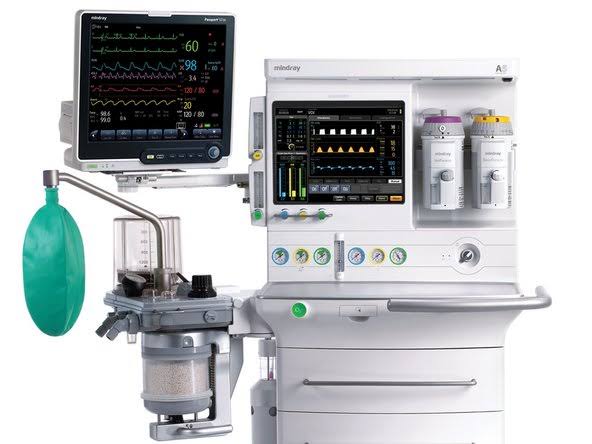
| Mindray | A-Series, WATO EX-65 | Newer entrant in the U.S. market with a smaller installed base of independent service providers | OEM direct or regional distributor network | Confirm which U.S.-based provider will actually carry parts locally, not just that a servicer exists somewhere |
| Midmark Animal Health / Matrx | VMS, VMS Plus | Veterinary-specific workstations, a materially different buyer than a hospital (small-animal practices) | OEM direct or veterinary equipment dealers | This is the veterinary segment, not a fourth human-hospital platform. Source it through a dealer that specializes in veterinary equipment rather than a human-hospital anesthesia machine supplier |
The Documents to Demand Before You Sign
Turn the above into something you can act on. Before you sign anything, get the following in writing.
- Request the complete maintenance and service log back to installation, not a one-line "serviced regularly" claim.
- Ask whether an OEM service contract is currently active on this unit, and get in writing whether it transfers to a new owner or lapses at sale.
- Confirm whether the operating software or firmware is licensed to the original facility, and what it takes to re-register it to a new owner.
- Get the seller or dealer to name, in writing, who can service this exact model after purchase: OEM direct, an authorized dealer, or a named independent service organization.
- Check whether this model is still in active OEM production or already flagged toward end of support, since parts and software support narrow fast after discontinuation.
- Confirm preventive maintenance and vaporizer calibration were performed on a documented interval, not only right before sale.
- Get the incoming inspection report itemized in writing (leak test, flow calibration, alarm function, backup oxygen supply), not a single "passed inspection" line.
- If buying private-sale or at auction, budget for re-establishing a service relationship, recalibration, and software re-registration before assuming the sale price is the total cost.
What This Guide Leaves Out, and Where to Buy the Machine Itself
This guide is scoped to the machine purchase decision itself, not cart configuration, vaporizer selection, breathing-circuit consumables, or sourcing individual parts once you already own the machine. Those are real decisions, just different research than this one.
For the purchase itself, iMedSales sells new and professionally refurbished anesthesia machines within its broader medical equipment category, ships worldwide, and offers a price-match guarantee (see how iMedSales structures its price-match guarantee on medical equipment). Documentation, not the invoice, is what should decide the purchase.
Frequently asked questions
How much does an anesthesia machine cost?
New anesthesia workstations from major OEMs typically run from the mid five figures to well over $100,000, depending on platform, monitoring integration, and vaporizer configuration. Certified refurbished units commonly sell for 30 to 50% less than a comparable new machine. Neither figure is the full cost: a unit with no transferable parts and software access can cost more over three to five years than a pricier machine with documentation intact.
Is it safe to buy a used or refurbished anesthesia machine?
It can be, but safety here is less about condition on delivery day than about whether documented service history and a real ability to get it serviced come with the unit. A machine that passes inspection but has no service log, no active OEM relationship, and no named local servicer is a bigger long-term risk than an older machine with clean documentation and an established pathway.
How long does an anesthesia machine last before it needs to be replaced?
There's no fixed number of years. The Anesthesia Patient Safety Foundation frames this as a maintain-or-replace decision tied to the ASA Guidelines for Determining Anesthesia Machine Obsolescence: whether current safety features and reliable service and parts remain available, not age alone. A well-documented, well-serviced older machine can still be a reasonable purchase; an undocumented one nearing obsolescence usually isn't.
What is the difference between an anesthesia machine and an anesthesia cart?
The anesthesia machine is the gas delivery, vaporizer, and ventilation unit itself, the equipment this guide is about. "Anesthesia cart" most often refers to the mobile supply and drug cart stationed alongside it, holding airway supplies, medications, and monitoring accessories. Buyers, and even clinical staff, use the two terms loosely and interchangeably, which is the actual source of the confusion. When shopping, confirm explicitly whether a listing is for the machine, the cart, or both.
How often does an anesthesia machine need to be serviced or calibrated?
As a general framing, plan on annual preventive maintenance at minimum, with vaporizer calibration on the OEM's specified interval or after any service event that could affect gas delivery. The interval varies by manufacturer and model, so confirm it against the machine's own service manual rather than a generic number. This is also where documented, not just claimed, maintenance history matters most: a facility's facility maintenance and safety program should track these intervals like any other capital equipment.
Sources
- Anesthesia Patient Safety Foundation. Older Machines, Maintain or Replace? Accessed August 2026.
- 24x7 Magazine. Safe Medical Device Repair Requires Access, Not Monopoly. Accessed August 2026.
- Anesthesia Patient Safety Foundation. New Guidelines Available for Pre-Anesthesia Checkout. Accessed August 2026.