An alternating pressure mattress is often sold as the answer to pressure injuries. It is a useful tool, but it is one rung on a ladder, not a substitute for turning a patient. Buy it for the right reason, match the technology to the patient, and know what Medicare's coverage code actually requires before you spend.
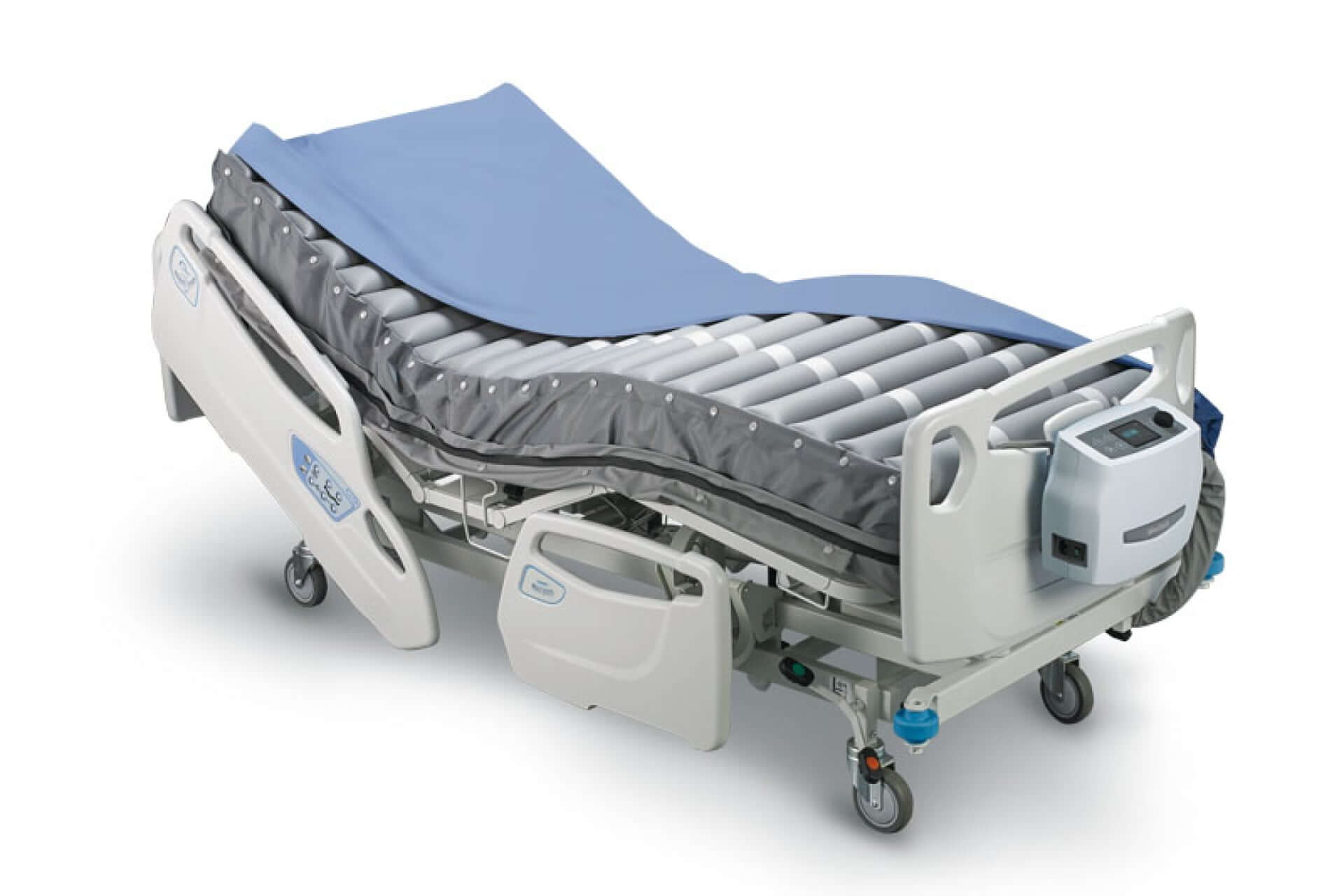
An alternating pressure mattress (APM) is a powered support surface built from rows of air cells that inflate and deflate on a cycle, so the points of the body bearing weight change every few minutes. The goal is to keep prolonged pressure off any one area of skin, which is the mechanical cause of most pressure injuries. Pressure injuries are common and costly: the Agency for Healthcare Research and Quality estimates that more than 2.5 million people in the United States develop pressure injuries each year, and that they cost the health system billions of dollars annually, according to AHRQ's pressure injury prevention resource.
This guide is vendor-neutral. It covers how an alternating pressure mattress works, how it differs from a low air loss surface, what the evidence does and does not show, the specifications that separate a useful unit from a noisy one, what Medicare will pay for under code E0277, and what to verify before buying new or used.
How an alternating pressure mattress works
The mechanism is simple and it is the whole point of the device. A pump feeds air into two or more sets of cells. While one set inflates and lifts part of the body, the adjacent set deflates and offloads the area beneath it. A few minutes later the sets reverse. No region of skin sits under high pressure for the full cycle, so blood flow to the tissue is not cut off for long enough to start the damage that becomes a pressure injury.
That is different from how a foam or static air surface works. A static surface redistributes weight by spreading it over a larger area and conforming to the body, which lowers peak pressure but does not change where the load sits. An alternating surface actively moves the load. Both approaches have a place, and the right one depends on the patient's risk and whether an injury is already present. For the broader range of surfaces and frames, our guide to the hospital bed mattress covers foam, static air, and powered options side by side, and the types of hospital beds guide covers the frames they sit on.
One thing an alternating pressure mattress does not do is replace repositioning. Every major prevention program treats support surfaces as an adjunct to, not a replacement for, a turning and repositioning schedule. AHRQ's prevention guidance is explicit that pressure-redistribution surfaces support a repositioning protocol rather than stand in for it, in its best practices for prevention. A mattress bought as a reason to turn the patient less often is a mattress bought for the wrong reason.
Alternating pressure vs low air loss: the comparison buyers ask about
The two powered technologies are constantly compared, and they solve overlapping but distinct problems.
Alternating pressure targets the pressure itself by cycling the load between cells. Its strength is mechanical offloading, and it is often chosen for patients at risk of deeper tissue damage.
Low air loss pushes a small, continuous flow of air through tiny laser holes in the cover, which keeps the skin surface cooler and drier. Its strength is microclimate management: controlling the heat and moisture at the skin that make tissue more vulnerable. Many higher-end systems combine both, alternating the cells while also bleeding air through the surface.
So which prevents more pressure injuries? The honest answer is that head-to-head evidence does not show a clear winner. A meta-analysis of four randomized trials covering more than 3,300 intensive care patients found no statistically significant difference in pressure injury rates between low air loss and alternating pressure systems, reported in a 2026 cohort study indexed in the National Library of Medicine's PMC archive. The practical takeaway is to choose on the patient's dominant problem. If skin moisture and heat are the issue, microclimate control matters; if relieving sustained pressure is the issue, alternating cycling matters; for many high-risk patients a combined system addresses both.
The specifications that actually matter
Once you know you need an alternating surface, the spec sheet decides whether it performs and whether it is bearable to live with. A few numbers carry most of the weight.
Cell height. Taller cells provide more lift and a deeper offload, which reduces the chance of the patient sinking through to the frame. Medicare's own product definition for a powered air mattress requires an inflated cell height of five inches or greater, a useful floor to hold any unit to, as described in the CMS pressure reducing support surfaces policy article. Overlays that sit on top of a regular mattress have shorter cells and a lower price but less protection.
Cycle time. The interval over which cells inflate and deflate is usually in the range of about ten to twenty-five minutes. There is no single correct number, but the pump should hold a steady, quiet cycle and let staff adjust it. Read the manufacturer specification rather than assuming.
Weight capacity and bottoming out. Every system has a rated weight range, and exceeding it lets the patient bottom out, which defeats the purpose. Confirm the rating covers the patient with margin, and look at whether the unit has a low-pressure or comfort setting and a static mode for transfers and procedures. For heavier patients, a bariatric-rated surface and frame is required.
The pump. The pump is the part that fails and the part that keeps people awake. Look for quiet operation, an audible alarm for low pressure or power loss, a transport or CPR mode that deflates the surface quickly, and a cover that is waterproof, vapor-permeable, and wipeable for infection control. Cheap pumps are loud and short-lived, which is a real clinical and comfort problem for a device that runs continuously.
What Medicare covers under code E0277
For a patient at home, an alternating pressure mattress is often a Medicare durable medical equipment item, and the rules are specific.
The powered pressure-reducing air mattress is billed under HCPCS code E0277, which covers a mattress that uses alternating pressure, low air loss, or powered flotation, with air cells five inches or taller and a surface designed to reduce friction and shear, per the CMS pressure reducing support surfaces policy article. It is classified as a Group 2 support surface, and Group 2 coverage is not automatic. The same CMS policy describes the typical path: the patient is largely immobile and has a stage 2 pressure ulcer on the trunk or pelvis that has not improved after at least a month on a comprehensive treatment program including an appropriate Group 1 surface, or has large or multiple stage 3 or 4 ulcers, or a recent flap or graft. In other words, Medicare expects the cheaper Group 1 surface and a documented treatment plan first.
Cost-sharing follows the standard durable medical equipment rules. Medicare defines durable medical equipment as equipment that is durable, used for a medical reason, appropriate for home use, and expected to last at least three years, and after the Part B deductible the patient generally pays 20 percent of the Medicare-approved amount, from a Medicare-enrolled supplier, per the Medicare durable medical equipment coverage page. Because the powered surface also requires prior authorization and detailed documentation, the paperwork is part of getting it paid for. Confirm current coverage, coding, and authorization rules with the payer and the relevant Medicare contractor before relying on them. None of this is billing advice.
Prevention, treatment, and where the mattress fits
An alternating pressure mattress sits inside a prevention and treatment program, and understanding that program keeps the purchase honest.
For prevention, the surface is one layer of defense alongside risk assessment, scheduled repositioning, skin checks, nutrition, and moisture management. For a patient who already has an injury, the surface offloads the wound area while the wound itself is treated. Knowing the depth of the injury changes the plan, which is why our guide to pressure injury stages is worth reading alongside this one, and deeper wounds may involve advanced therapies covered in our overview of negative pressure wound therapy. The day-to-day consumables that go with wound management are covered in our wound care supplies guide.
The buying decision, then, is not "powered mattress or nothing." It is a graded choice: a quality foam or static surface for lower-risk patients, an alternating or low air loss system when risk is high or an injury is present, and air-fluidized therapy for the most severe cases. Match the surface to the patient's risk and skin status, not to the longest spec sheet.
Buying new, buying used, and what to verify
Powered surfaces are a meaningful purchase, and facilities often weigh new against refurbished units to control cost. Both can be appropriate if you check the right things.
For a new unit, focus on the specifications above, the warranty on the pump and cover, the availability of replacement cells and covers, and whether the supplier will service the pump. For a used or refurbished system, the cover and pump are where risk concentrates. Verify that the cover is intact, clean, and still waterproof and vapor-permeable, that every air cell holds pressure without leaks, that the pump cycles steadily and the alarms function, and that the unit has been properly cleaned and disinfected between patients. A leaking cell or a tired pump turns a prevention device into a false sense of security.
The diligence here is the same diligence you would apply to any reconditioned device. Our checklist for vetting a refurbished equipment supplier covers the questions to ask about testing, warranty, and documentation, and our guide to buying refurbished hospital beds covers the frame the mattress will sit on. iMedSales supplies new and professionally refurbished support surfaces and beds with a price-match guarantee and a 30-day return policy, and is one option among reputable peers worth comparing on specification, warranty, and total cost.
Frequently asked questions
How does an alternating pressure mattress work?
It uses a pump to inflate and deflate alternating rows of air cells on a cycle of roughly ten to twenty-five minutes. As one set of cells lifts part of the body, the adjacent set deflates and relieves the area beneath it, so no region of skin bears sustained pressure long enough to cut off blood flow and start a pressure injury.
Alternating pressure vs low air loss: which is better?
Neither is universally better. A meta-analysis of intensive care trials found no statistically significant difference in pressure injury rates between the two, per the National Library of Medicine's PMC archive. Alternating pressure targets the load mechanically; low air loss targets skin heat and moisture. Choose by the patient's dominant problem, or a combined system if both apply.
Does Medicare pay for an alternating pressure mattress?
It can, under HCPCS code E0277 as a Group 2 support surface, but not automatically. Medicare generally expects the patient to be largely immobile with a qualifying pressure ulcer that has not improved on a cheaper Group 1 surface and a documented treatment program, and the item requires prior authorization, per the CMS pressure reducing support surfaces policy article. Confirm current rules with the payer; this is not billing advice.
Is an alternating pressure mattress better than a foam mattress?
It depends on risk. For lower-risk patients, a quality foam or static air surface plus repositioning is often appropriate. An alternating surface is chosen when pressure injury risk is high or an injury is already present. Support surfaces of any kind are an adjunct to repositioning, not a replacement for it, per AHRQ prevention guidance.
Can an alternating pressure mattress be used at home?
Yes. It is commonly used in the home for at-risk or recovering patients and can qualify as Medicare durable medical equipment when prescribed as medically necessary and supplied through an enrolled supplier, per the Medicare durable medical equipment coverage page. It needs a continuous power source and a working pump, so plan for power backup if outages are a concern.
This guide is general information for procurement and clinical-operations readers, not medical or billing advice. Confirm coverage, coding, and clinical decisions with the payer and a qualified clinician.