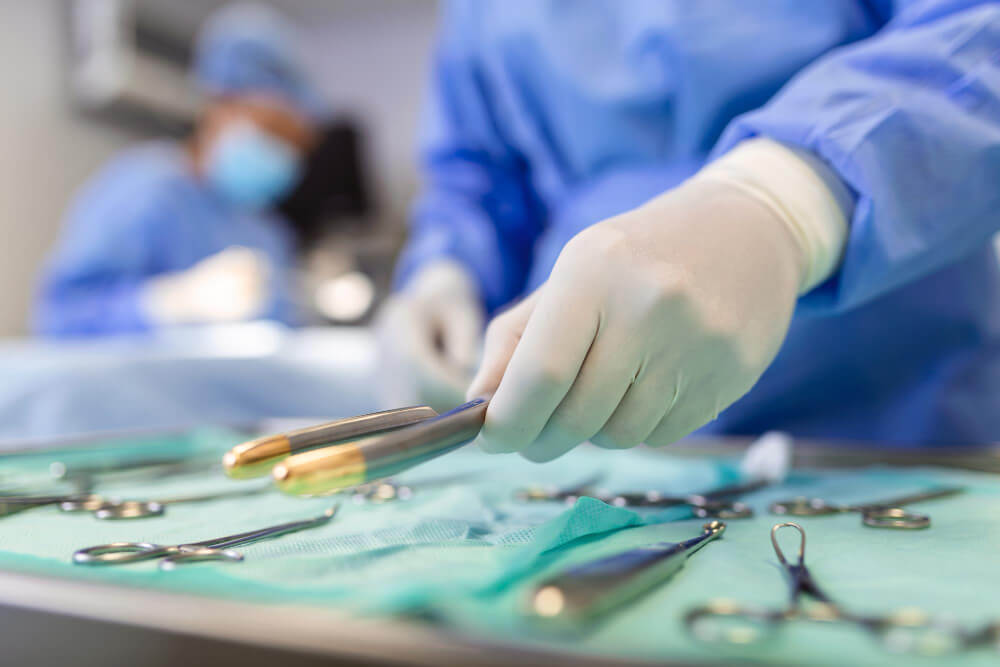
Quick answer: Surgical retractors hold tissue and organs aside to give the surgeon a clear, safe view of the operative site. They fall into two families: handheld retractors (held by an assistant, like the Army-Navy, Senn, Deaver, and Richardson) and self-retaining retractors (which lock open by themselves to free hands, like the Weitlaner, Gelpi, Balfour, and Bookwalter). Choose based on incision depth, tissue type, and whether you need hands-free exposure for a long procedure.
In the operating room, visibility is everything: a surgeon cannot safely work on what they cannot see. Retractors are the instruments that create that view, holding back skin, muscle, and organs to expose the surgical site while preventing inadvertent damage to surrounding organs and nerves. There are dozens of named retractors, but they organize cleanly into two families and a few selection rules. Learn those and the whole category makes sense.
The Two Families: Handheld vs. Self-Retaining
The single most important distinction is how the retractor is held open.
Handheld retractors are held in position by an assistant (or the surgeon), giving dynamic, adjustable control of the exposure. They are simple, versatile, and ideal when the exposure needs to change moment to moment, but they occupy a pair of hands.
Self-retaining retractors have a locking mechanism, such as a ratchet, spring, or clamp, that holds the blades or hooks open once positioned, freeing the hands of the surgeon and assistant and eliminating hand fatigue during long procedures. They are the answer for sustained exposure when no one can spare a hand.
Which family to choose
- Handheld: dynamic, changing exposure; short tasks; an assistant is available
- Self-retaining: sustained exposure; long procedures; hands-free needed
Common Handheld Retractors
- Army-Navy: a double-ended retractor with two flat blades of different lengths, used to retract small amounts of superficial tissue.
- Senn: a small double-ended retractor with a rake on one end and a flat blade on the other, for superficial tissue in plastic, small bone and joint, or neck procedures.
- Richardson: one of the most common general retractors, made in a range of blade widths and used primarily for retracting tissues within cavities (abdomen and pelvis) and deep incisions, holding back multiple layers of deep tissue.
- Deaver: a curved instrument with a narrow-to-wide flat blade for deep abdominal or chest incisions, classically used to retract a lobe of the liver during gallbladder surgery.
- Malleable (ribbon): a flat blade that can be bent to conform to the anatomy, for flexible, broad exposure.
- Hohmann: a rigid orthopedic retractor for levering and exposing bone.
Common Self-Retaining Retractors
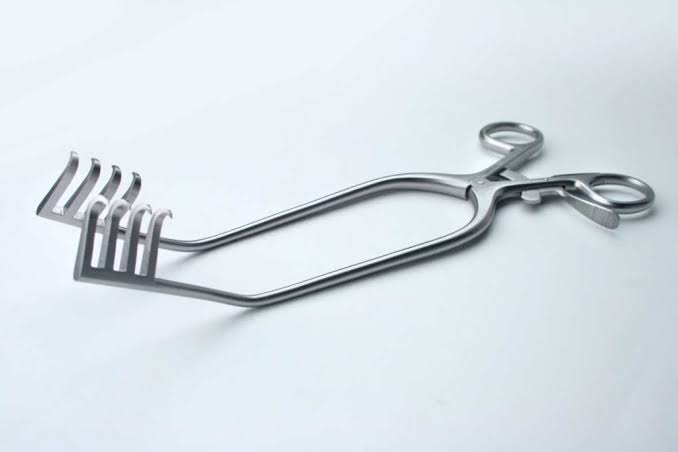
- Weitlaner: a scissor-style retractor with hinged blades and sharp or blunt prongs, held by a ratchet, common in plastic surgery and large bone and joint procedures.
- Gelpi: a retractor with pointed ends that penetrate tissue gently and angled tips, often used in spine surgery and deeper, narrow spaces.
- Balfour: a ring-shaped retractor with adjustable side blades and a center blade, placed in the incision and locked with a wing nut for broad exposure in deep abdominal surgery.
- Bookwalter: a modular system whose post attaches to the table's side rail and holds a ring to which various Richardson, malleable, and Deaver-like blades attach with ratcheted clips, giving table-mounted, highly stable exposure.
- Finochietto: the classic rib spreader, designed to separate ribs for access to the chest cavity in thoracic surgery.
How to Choose the Right Retractor
Three variables drive selection:
1. Depth of the incision
Superficial work calls for small handheld retractors like the Army-Navy or Senn. Deep cavities favor either long handheld blades (Deaver, Richardson) or, for sustained access, self-retaining retractors like the Balfour for deep abdominal surgery.
2. Tissue type
Match the retractor's build to the tissue. Soft-tissue retractors like the Senn are delicate and flexible, while those for bone or muscle, such as the Hohmann, are rigid to handle thicker structures. Delicate work like neurosurgery uses fine, low-trauma retractors, while tough tissue like abdominal muscle takes a robust retractor like the Deaver.
3. Hands-free need and procedure length
For long or complex procedures where staff cannot hold a retractor for the duration, self-retaining retractors maintain consistent exposure and prevent fatigue. For shorter procedures or when the exposure must change frequently, handheld retractors give an assistant dynamic control.
| Situation | Good choice |
|---|---|
| Superficial tissue, short task | Army-Navy, Senn (handheld) |
| Deep cavity, dynamic exposure | Deaver, Richardson (handheld) |
| Deep abdominal, sustained exposure | Balfour, Bookwalter (self-retaining) |
| Spine / narrow deep space | Gelpi, Weitlaner (self-retaining) |
| Bone / orthopedic | Hohmann (handheld) |
| Thoracic / rib access | Finochietto rib spreader |
A Note on Safety and Newer Designs
Retractors with sharp prongs, like the Weitlaner and Gelpi, demand care: take care not to puncture vital tissue or oneself with the points. Across the category, newer designs aim to be lighter and less traumatic on tissue, and some now integrate light to improve visualization at the surgical site, especially valuable in minimally invasive procedures where exposure is limited.
Surgical retractors come down to a simple logic: decide whether you need handheld control or hands-free self-retention, then match the specific retractor to the depth of the incision and the toughness of the tissue. Know the handful of named retractors in each family, the small superficial ones like Army-Navy and Senn, the deep handhelds like Deaver and Richardson, and the self-retaining workhorses like Weitlaner, Gelpi, and Balfour, and you can select the right exposure tool for almost any procedure.
Frequently Asked Questions
What is a surgical retractor used for?
A surgical retractor holds back skin, muscle, organs, and other tissue to expose the operative site, giving the surgeon a clear, unobstructed view. Beyond visibility, retractors protect the patient by consistently holding structures aside, preventing accidental damage to surrounding organs and nerves during the procedure.
What is the difference between handheld and self-retaining retractors?
Handheld retractors are held in position by an assistant, giving dynamic, adjustable control but occupying a pair of hands. Self-retaining retractors have a ratchet, spring, or clamp that locks them open once positioned, freeing the hands of the surgical team and preventing fatigue during long procedures. Handheld suits changing exposure; self-retaining suits sustained exposure.
What are the most common surgical retractors?
Common handheld retractors include the Army-Navy and Senn (superficial tissue), and the Deaver and Richardson (deep abdominal and chest incisions). Common self-retaining retractors include the Weitlaner and Gelpi (orthopedic, spine, and plastic procedures) and the Balfour and Bookwalter (deep abdominal surgery). The Finochietto rib spreader is the standard for thoracic access.
How do you choose the right retractor for a procedure?
Match three factors: incision depth (small handhelds like Army-Navy for superficial, long blades or self-retaining retractors for deep cavities), tissue type (delicate retractors for soft tissue and neuro work, rigid ones like the Hohmann for bone), and whether you need hands-free exposure (self-retaining for long procedures, handheld for dynamic or short tasks). These three considerations point to the right instrument.
When should a self-retaining retractor be used?
Use a self-retaining retractor when a procedure requires sustained, stable exposure and the surgical team cannot dedicate hands to holding a retractor, such as in long abdominal procedures like laparotomies or in deep, narrow spaces like spine surgery. Their locking mechanism holds the incision open securely, freeing the team to focus on the operation.