Quick answer: The global refurbished medical equipment market was worth roughly $16.6 billion in 2024 and is widely projected to grow at about a 10% annual rate, reaching the low-$40-billions by the early 2030s. Imaging equipment is the largest product segment (about 38.6%), hospitals the largest buyer (about 47.5%), and North America the leading region (about 38.5%). For buyers, the takeaway is that this is a large, fast-growing, well-supplied market driven by healthcare budget pressure, with the deepest inventory in imaging.
Understanding the refurbished medical equipment market is useful for buyers, not just analysts, because the market's structure tells you where supply is deep, where prices are competitive, and why the option exists at all. The short version: this is a large and rapidly growing market, and it is growing for reasons (healthcare cost pressure, sustainability, access) that are not going away. This article synthesizes the data and, more importantly, translates it into what it means when you are the one buying.
Market Size: Around $16.6 Billion and Climbing
Estimates vary by research firm, as they always do, but they cluster tightly around a 2024 value in the mid-teens of billions of dollars. Multiple analyses put the 2024 market at approximately $16.6 billion, growing at a CAGR of about 9.9% and projected to reach roughly $42.7 billion by the early-to-mid 2030s. A separate analysis similarly valued it at $16.53 billion in 2024, reaching about $40.52 billion by 2033 at a 9.95% CAGR.
Other firms land at different absolute numbers (some estimate the 2024 base nearer $12 to 19 billion, with growth rates from roughly 7.6% to the mid-teens), which is normal given different definitions of what counts as "refurbished" versus "used." What matters is the consensus on direction and pace: a multibillion-dollar market growing at roughly double the rate of healthcare spending overall. The exact figure is less important for a buyer than the unmistakable trajectory.
The market at a glance (2024)
- Size: approximately $16.6 billion globally
- Growth: about 10% CAGR, heading toward the low $40 billions by the early 2030s
- Largest product segment: medical imaging (~38.6%)
- Largest buyer: hospitals (~47.5%)
- Leading region: North America (~38.5%)
Where the Market Is Concentrated, and Why It Matters to You
Imaging dominates the product mix
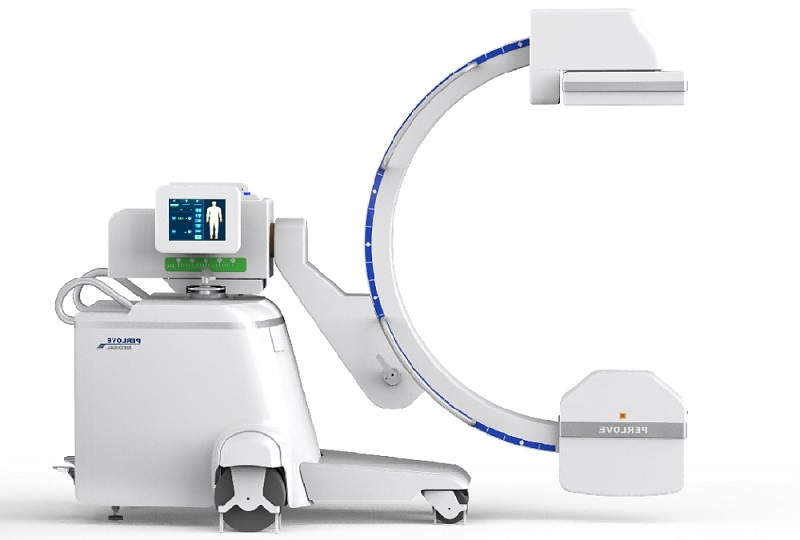
Medical imaging equipment is the largest product segment, contributing about 38.6% of total market revenue in 2024. For a buyer, segment dominance signals where the refurbished supply chain is deepest and most mature: CT, MRI, ultrasound, and X-ray have the most refurbishers, the most inventory, and the most competitive pricing. If you are buying refurbished imaging, you are buying in the most developed part of the market, which works in your favor.
Hospitals are the largest buyers
Hospitals held about 47.5% of the market by application in 2024, with clinics, ambulatory surgical centers, and diagnostic centers making up the rest. The presence of large, sophisticated hospital buyers is reassuring for smaller purchasers: it means refurbished equipment is trusted at the highest levels of healthcare, not a budget compromise confined to small practices.
North America leads; Asia-Pacific grows fastest
North America led with roughly 38.5% of global revenue in 2024, while Asia-Pacific is projected to be the fastest-growing region, expanding at around an 11.38% CAGR through 2030 as private healthcare expands across China, India, and secondary markets. A mature North American market means well-established sellers, service networks, and standards for buyers there.
What Is Driving the Growth
The market's expansion rests on a few durable forces, all of which translate into reasons the refurbished option will keep getting stronger.
Healthcare budget pressure
The core driver is cost. Hospitals operate under intense financial strain: by one account, U.S. hospitals spent about $146.9 billion on medical supplies in 2023 while facing roughly $130 billion in Medicare and Medicaid underpayments, sharpening the need for equipment that stretches budgets without reducing care quality. Refurbished MRI scanners that list 40 to 60% below the cost of a new unit free capital for workforce and digital investments. Across the market, refurbished devices are commonly priced 30 to 70% lower than new counterparts.
The circular economy and sustainability
Extending equipment lifecycles reduces medical waste and aligns with the sustainability and circular-economy purchasing rules that more health systems are adopting. This is increasingly a values-and-policy driver, not only a cost one, which broadens the buyer base.
Access and emerging markets
Refurbished equipment lets new and budget-constrained providers access advanced technology they could not otherwise afford, fueling adoption in developing regions and among new market entrants setting up or expanding quickly. With global healthcare spending near $9.8 trillion, around 10% of global GDP, the pressure for cost-efficient solutions is structural.
What the Outlook Means for Buyers
Translate the data into a buying perspective and a few practical conclusions emerge:
- The market is mature enough to trust. A multibillion-dollar market with hospitals as the largest buyers is not a fringe option; it is mainstream healthcare procurement.
- Imaging is the buyer's strongest position. The deepest segment means the most competition, inventory, and service infrastructure, so refurbished imaging is where savings and selection are best.
- Growth means improving supply and standards. Rising volume is pulling in better refurbishment processes, quality assurance, and certification, so the reliability gap with new equipment continues to narrow.
- Demand is rising, so act on good inventory. Fast growth means strong competition for quality units; when the right refurbished equipment is available, waiting can mean losing it.
The refurbished medical equipment market is, in short, a large and growing market that exists because it solves a real and worsening problem: healthcare needs advanced technology and cannot always afford it new. For buyers, that is the most reassuring fact of all. You are not finding a loophole; you are participating in one of the fastest-growing, most structurally sound segments of healthcare procurement, best supplied exactly where the highest-value equipment lives.
Frequently Asked Questions
How big is the refurbished medical equipment market?
The global market was valued at approximately $16.6 billion in 2024 by several research firms, with estimates varying by definition. It is widely projected to grow at about a 10% compound annual rate, reaching the low $40 billions by the early-to-mid 2030s. The variation between firms reflects different definitions of refurbished versus used equipment, but the consensus on strong growth is consistent.
What is the most common type of refurbished medical equipment?
Medical imaging equipment is the largest product segment, accounting for roughly 38.6% of the market in 2024. This includes CT scanners, MRI machines, ultrasound systems, and X-ray equipment. For buyers, this dominance means imaging has the deepest refurbished supply, the most competition among sellers, and the most developed service infrastructure.
Why is the refurbished medical equipment market growing so fast?
The main driver is healthcare budget pressure: providers face high costs and reimbursement shortfalls and need advanced equipment without new-equipment prices, with refurbished units commonly priced 30 to 70% below new. Additional drivers include sustainability and circular-economy purchasing policies, and expanding access in emerging markets where new equipment is unaffordable.
Who buys the most refurbished medical equipment?
Hospitals are the largest buyers, holding roughly 47.5% of the market by application in 2024, followed by clinics, ambulatory surgical centers, and diagnostic centers. The fact that large hospitals are the biggest buyers signals that refurbished equipment is trusted at the highest levels of healthcare, not limited to small or budget-constrained practices.
How much can buyers save with refurbished medical equipment?
Savings commonly range from 30 to 70% below new pricing depending on the equipment type. High-value imaging systems like MRI machines often list 40 to 60% below new. These savings are the primary reason the market is growing, as they free significant capital that providers can redirect to staffing, facilities, and other investments.