Quick answer: There are four ways to acquire medical equipment, not two: buy with cash, finance with a loan, lease, or rent. Buying with cash or a loan is cheapest over a long life and gives you ownership; leasing and renting cost more in total but preserve cash, bundle maintenance, and let you upgrade. The right choice depends on how long you will use the equipment, how fast it becomes obsolete, and what your cash is worth elsewhere. Compare total cost of ownership, not monthly payments.
The question "should we rent or buy this equipment?" is usually framed too narrowly. There are really four acquisition paths, and each one produces a different total cost and a different set of obligations. Buying outright, financing through a loan, leasing, and renting are not points on a single line from cheap to expensive; they are different trades between cash, ownership, flexibility, and risk.
The mistake that costs facilities the most is comparing a monthly rental or lease payment against a purchase price and concluding the smaller number wins. That comparison is meaningless, because it ignores everything that happens after the purchase. As one health-system CFO put it, "the total cost of ownership is so much more than just the device itself. It's the training. It's the parts. It's the time." This guide compares all four paths on that fuller basis and gives you a worked example you can adapt to your own numbers.
The Four Ways to Acquire Equipment
Before the cost comparison, it helps to be precise about what each path actually is, because the terms get used loosely.
Buying with cash
You pay the full price upfront and own the asset immediately. You carry all maintenance, repair, and eventual disposal, and you capture any resale value at the end. Lowest total cost over a long life, highest upfront cash demand.
Financing with a loan
You borrow to buy, then repay principal and interest over a term. You own the equipment, often once the loan is paid, and you build equity as you pay. A loan charges a principal-and-interest rate rather than a lease factor rate, and generally requires stronger credit and more documentation than a lease, with many lenders looking for at least six months of operating history and a credit score around 575 or higher.
Leasing
A lease is a long-term rental in which a finance company owns the equipment and your practice uses it for a fixed term in exchange for monthly payments. At the end, you typically return it, renew, or buy it out, sometimes for as little as a $1 buyout, with terms commonly running one to five years and down payments ranging from 0% to 25%. Leases frequently bundle two- to three-year warranties and maintenance, which removes repair risk during the term. A lease is not a loan, and it usually costs more over the full period than borrowing would.
Renting
Renting is the shortest-commitment path: you pay for the equipment only while you need it, with the lowest upfront cost and the most flexibility. The US medical equipment rental industry alone was projected to generate around $5.0 billion in revenue by 2025, reflecting how much facilities value access without ownership for variable or short-term needs.
What Total Cost of Ownership Actually Includes
The reason ownership looks cheaper than it is, and rental looks more expensive than it is, comes down to the costs buyers forget. A complete total cost of ownership (TCO) calculation includes far more than the acquisition price:
- Acquisition cost: purchase price, or the sum of all lease/rental payments plus any down payment and buyout.
- Financing cost: interest on a loan, or the embedded finance charge in a lease factor rate.
- Maintenance and repair: service contracts, parts, and labor, which an owner pays and a lease often bundles.
- Installation and training: getting the device in and staff competent on it.
- Downtime risk: what it costs you when the device is out of service.
- Obsolescence: the value lost as newer technology arrives, borne entirely by the owner.
- Disposal or resale: an owner recovers resale value; a renter or lessee simply hands it back.
Ownership concentrates these costs on you. Leasing and renting shift many of them, maintenance, obsolescence, disposal, to the lessor, which is part of what the higher payment is buying. That is why the honest comparison is never "payment versus price."
The costs buyers forget
- Maintenance, parts, and service contracts over the full life
- Staff training and installation
- Obsolescence: technology value lost while you own it
- Downtime when an owned device fails out of warranty
- Disposal at end of life
A Worked Example: A $385,000 CT Scanner
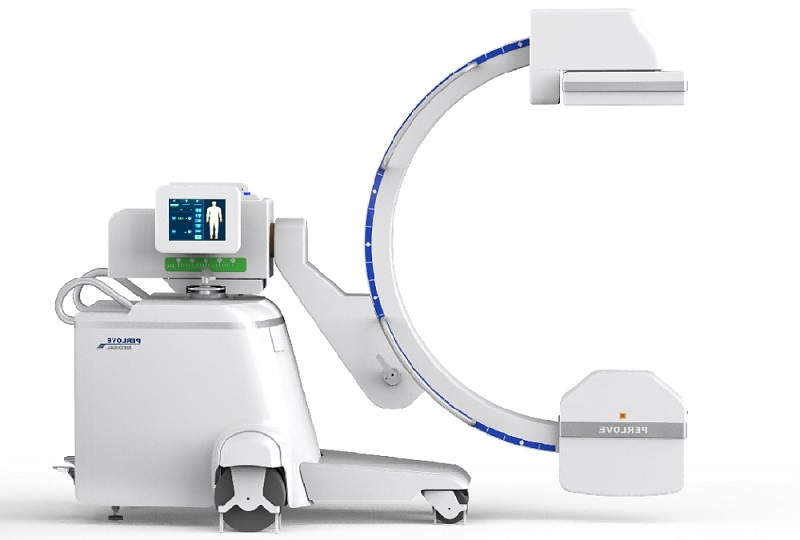
Abstract comparisons do not decide anything, so consider a real-world structure drawn from a documented case: an independent imaging center needing a 128-slice CT scanner, with a buy price of $385,000 and a lease quote of $6,950 per month for 60 months with a $1 buyout.
| Path | Upfront | Roughly over 5 years | Own at end? |
|---|---|---|---|
| Buy cash | $385,000 | $385,000 + maintenance | Yes |
| Finance (loan) | Down payment | $385,000 + interest + maintenance | Yes |
| Lease ($1 buyout) | Low to none | ~$417,000 ($6,950 × 60) + $1 | Yes, via buyout |
| Rent (short term) | Lowest | Highest per-month; only while needed | No |
The lease total runs roughly $32,000 above the cash price over five years. On a pure-dollars basis, buying wins. But that is not why the clinic in the case chose to lease. The decisive factor was that leasing avoided a massive upfront spend and preserved cash for expansion and staffing. They judged that the cash freed up would earn more deployed into growth than the roughly $32,000 premium cost them. That is the correct way to make the decision: not "which is cheapest," but "what is my cash worth elsewhere, and what am I buying with the premium?"
When Each Path Wins
The variables that should drive the decision are duration of use, rate of obsolescence, cash position, and how much you value flexibility.
Buy (cash or loan) when:
- The equipment has a long useful life and slow obsolescence (exam tables, basic surgical instruments, sterilizers).
- You will use it heavily for many years, so amortized cost per use is low.
- You have the capital, or loan terms are favorable, and you want the asset and its resale value.
Lease when:
- The technology evolves quickly and you want to upgrade at term end (advanced imaging, diagnostics).
- You want predictable monthly costs with maintenance bundled in.
- Preserving capital matters more than the lowest absolute cost, and a $1 buyout still gives you an ownership option.
Rent when:
- The need is short-term, seasonal, or uncertain (covering a demand spike, a trial, a temporary location).
- You cannot justify a multi-year commitment.
- You need a unit immediately while a purchased one is on order or being repaired.
A useful rule of thumb from across the finance literature: higher-cost, rapidly evolving equipment is often leased, while lower-cost or long-life equipment is more frequently purchased. Match the acquisition method to the equipment's economics, not to a blanket policy.
Where Refurbished Equipment Changes the Math
One option reshapes the entire comparison: buying refurbished. A refurbished purchase can cost a fraction of new, which narrows the gap between buying and leasing dramatically. When the buy price drops, the case for ownership strengthens, because the upfront-cash objection (the main reason to lease) shrinks. A facility that could not justify $385,000 in cash for a new CT might comfortably buy a refurbished unit outright, own it, and skip the lease premium entirely. For long-life, slower-obsolescence equipment especially, refurbished-and-owned is frequently the lowest true total cost of all four paths.
How to Run Your Own Comparison
To make this decision for a specific purchase, build a simple five-year (or full-life) TCO for each path you are considering:
- Sum every payment. Purchase price or all lease/rental payments, plus down payment and buyout.
- Add financing cost. Loan interest or the lease's embedded charge.
- Add maintenance over the period, and note where a lease bundles it in.
- Subtract end-of-life value for paths where you own and can resell.
- Weigh the cash difference against what that cash earns deployed elsewhere in your practice.
Do that, and the decision stops being a guess. Often the cheapest path on paper is buying, especially refurbished, while the right path for a growing or cash-constrained practice is leasing, accepting a modest premium to keep capital working. Both can be correct; what is never correct is choosing on the monthly payment alone.
Frequently Asked Questions
Is it cheaper to rent or buy medical equipment?
Over a long useful life, buying is almost always cheaper in total dollars, because rental and lease payments include the lessor's margin, maintenance, and obsolescence risk. Renting or leasing is cheaper only in the short term and when you factor in the value of preserving capital. For equipment you will use heavily for years, buying wins on cost; for short-term or rapidly obsolescing needs, renting or leasing often wins overall.
What is the difference between leasing and financing medical equipment?
With financing (a loan), you borrow to buy and own the equipment outright once it is paid off, building equity as you go. With a lease, a finance company owns the equipment and you use it for a fixed term, then return it, renew, or buy it out, sometimes for as little as $1. Leasing usually has lower monthly payments and easier qualification but costs more over the full term.
What costs do people forget when buying medical equipment?
The big omissions are maintenance and service contracts, parts, staff training, installation, downtime when a device fails out of warranty, obsolescence as newer technology arrives, and disposal at end of life. These are the difference between the purchase price and the true total cost of ownership, and they are why a low sticker price does not always mean the cheapest path.
When does leasing medical equipment make the most sense?
Leasing makes the most sense for higher-cost, rapidly evolving equipment you will want to upgrade, when preserving cash flow matters more than the lowest absolute cost, and when you value bundled maintenance and predictable monthly payments. A $1 buyout option lets you still own the equipment at term end if it remains useful.
How does buying refurbished change the rent-versus-buy decision?
Buying refurbished can cost a fraction of new, which sharply reduces the upfront-cash barrier that usually pushes facilities toward leasing. For long-life equipment with slow obsolescence, buying a refurbished unit outright is frequently the lowest total cost of ownership of any acquisition path, because you own the asset without paying new-equipment prices or lease premiums.