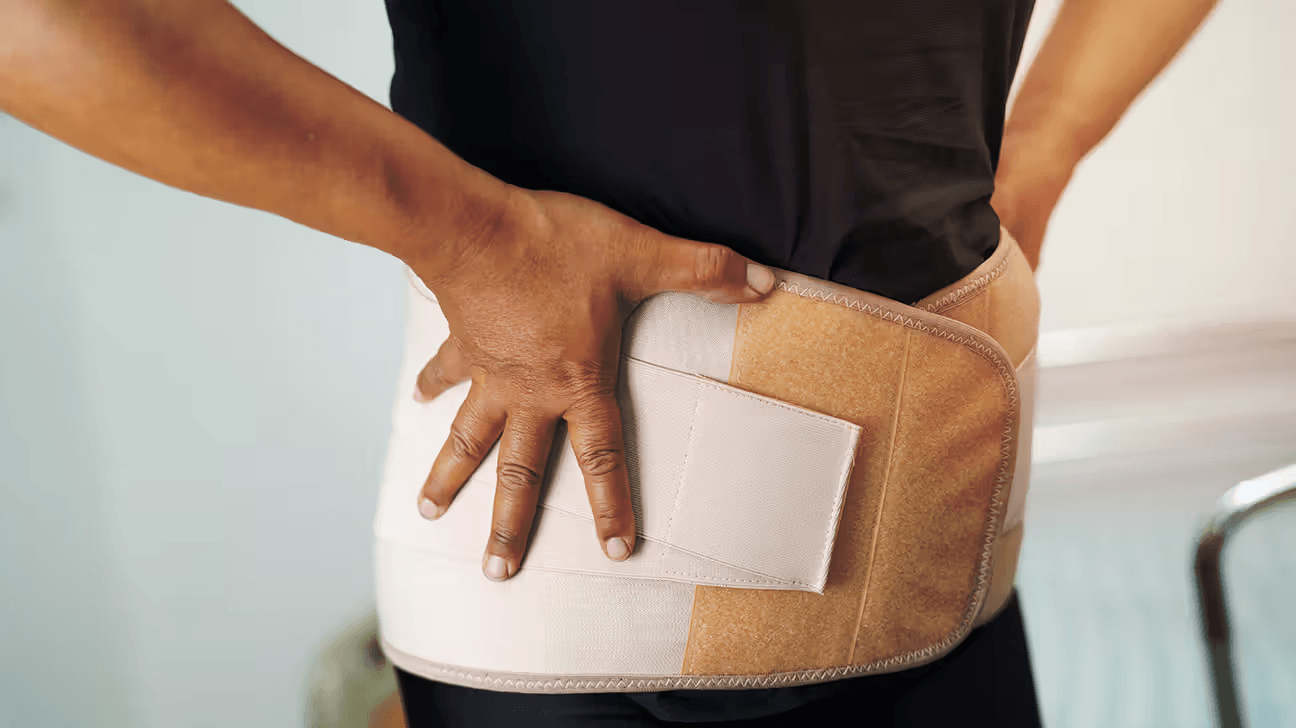
An abdominal binder is a wide elastic belt worn around the midsection, usually after abdominal surgery or a cesarean. The evidence for it is real but modest and short-term, and it is not a weight-loss device. The right binder is the one sized to the patient and matched to the surgical site, worn for the few days it actually helps.
An abdominal binder, sometimes called a surgical binder or belly binder, is a broad band of elastic fabric that wraps around the abdomen and fastens with hook-and-loop closures. It is most often used after a laparotomy, a hernia repair, a cesarean delivery, or abdominal liposuction, where it supports the abdominal wall, holds dressings in place, and makes the first days of moving around more comfortable. It is simple hardware, which is exactly why it gets bought carelessly and used past the point where it helps.
This guide is vendor-neutral and evidence-led. It covers what an abdominal binder actually does, according to the clinical trials, how to size it by waist circumference and panel height, the closure and material choices, how the surgical site changes the pick, and the two things buyers get wrong: how long to wear it and the belief that it slims the waist. Because these are health claims, the clinical points here are drawn from high-authority sources. The goal is that you order the right binder for the patient, whether or not you buy it from us.
What an abdominal binder actually does
An abdominal binder applies gentle, even pressure across the abdominal wall. After surgery, that pressure supports the incision and the underlying muscles, holds dressings and drains in place, and gives the patient something to brace against when coughing, standing, or walking in the first days of recovery. The intended benefit is that reducing pain on movement makes patients more willing to get up and move, which is itself important to recovery.
The trials back a real but limited effect. A meta-analysis of randomized controlled trials of postoperative abdominal binding found that wearing a binder after midline laparotomy reduced postoperative pain on the first and third postoperative days and improved physical activity by the third day, while not affecting pulmonary function. A 2024 systematic review of abdominal binders after abdominal surgery similarly concluded that binders reduce early postoperative pain and can support mobilization, and are well tolerated. The honest summary is that a binder helps with pain and getting moving in the first few days, and that is a worthwhile but modest job, not a cure.
The cesarean case
Abdominal binders are widely used after cesarean delivery, and the evidence there points the same way. A randomized controlled trial of binder use after cesarean found that the binder decreased postoperative distress and pain and supported earlier mobilization, while it did not affect postoperative bleeding. The American College of Obstetricians and Gynecologists, in its guidance on postpartum pain management, notes that nonpharmacologic measures such as abdominal binders may help with postoperative pain control as part of a broader multimodal approach.
The practical reading for a buyer is that a binder is a reasonable comfort and mobility aid after a cesarean, and it can sit alongside, not replace, the standard pain plan. It does not reduce bleeding and is not a recovery shortcut. For new mothers, comfort and a correct fit over the incision are what make the binder something they will actually wear during the window when it helps.
Sizing: waist circumference first, panel height second
Fit is the decision that makes or breaks a binder. Too loose and it provides no support; too tight and it is uncomfortable, can restrict breathing, and will be taken off. Abdominal binders are sized primarily by waist or abdominal circumference, measured around the widest part of the abdomen, and matched to the manufacturer's size chart rather than to clothing size. Many binders are sold in broad bands such as small, medium, large, and extra-large, with bariatric sizes for larger patients, and the bands map to a range of inches that differs by brand.
The second dimension is panel height, meaning how tall the binder is from top to bottom. Common heights run from about 6 inches up to 12 inches. A taller panel covers more of the abdomen and suits a long midline incision or a taller patient, while a shorter panel suits a low incision such as a cesarean or a shorter torso, where a tall binder would ride up over the ribs or fold. Match the panel height to the incision location and the patient's torso length so the binder sits flat and covers the wound without bunching. For a facility, stocking a range of both circumferences and panel heights is what lets staff fit patients correctly the first time.
Closure, panels, and adjustability
Almost all surgical abdominal binders close with hook-and-loop fasteners, because they let the wearer adjust the tension easily and reapply the binder one-handed, which matters for a post-surgical patient who cannot bend or twist. The questions worth asking are how wide the closure area is, since a wider closure spreads pressure and grips more securely, and whether the binder uses a single wrap panel or multiple overlapping panels.
Single-panel binders are simple and inexpensive and work well for many patients. Multi-panel binders, with two or three separate elastic panels that overlap, let the patient tune the pressure at different levels of the abdomen and tend to stay in place better on a larger or differently shaped torso. For very large patients, a wider or panelized binder distributes pressure more comfortably than a single narrow band. The closure and panel design is mostly about keeping the binder where it belongs and making the tension adjustable, both of which support the patient actually wearing it.
Material, breathability, and special features
Binders are usually made of elastic blends such as latex-free elastic with cotton or polyester. Two material questions matter for real-world use. First, breathability: a binder worn for hours against a healing incision should let moisture and heat escape, because a hot, sweaty binder gets taken off and can irritate the skin around the wound. Look for breathable, moisture-wicking fabric, especially for longer wear. Second, latex content: confirm a latex-free binder for any patient with a latex allergy, which is common enough in surgical populations to make it a default question.
Some binders add task-specific features. Ostomy-compatible binders have an opening or a hernia-support panel to accommodate a stoma and its appliance. Binders intended to be worn over drains may have ports or extra width to secure drain tubing. After certain surgeries, a binder may be paired with other recovery supplies, so a binder is often bought as part of a kit rather than alone. For the dressings the binder helps hold in place, see our guide to wound dressing types, and for the broader range of post-surgical supports, our orthopedic soft goods guide.
How long to wear it: the limit buyers miss
Here is the part the product listings skip. The measured benefit of an abdominal binder is concentrated in the early postoperative period. The meta-analysis found the pain benefit on the first and third days after surgery, and a randomized controlled trial of binders after major abdominal surgery similarly reported that the difference in pain favored the binder mainly in the first postoperative days. The binder is a tool for the first stretch of recovery, not a garment to wear for months.
Wearing a binder long past that window does not add a proven benefit and can have downsides. Constant abdominal compression for weeks can weaken rather than help the core muscles a patient needs to rebuild, and it can mask problems at the incision. The actual wear schedule is a clinical decision the surgeon should set, commonly measured in days to a couple of weeks, often with the binder removed for sleeping and skin checks. For buyers, the useful framing is that you are buying a short-term recovery aid; one well-fitted binder, possibly a second for laundering, is usually the right quantity, not a long-term supply.
What an abdominal binder does not do
Two misconceptions are worth correcting directly. First, an abdominal binder is not a weight-loss or waist-training device. It does not burn fat or permanently reshape the waist; any change in appearance while it is on is temporary compression, and the clinical evidence is about postoperative pain and mobility, not body shape. Marketing that sells binders as slimming garments is selling something the medical device does not do.
Second, a binder is not a treatment for a hernia. It can provide comfort and support around an abdominal wall weakness or after a hernia repair, but it does not fix a hernia or replace surgical repair, and a hernia that needs repair still needs repair. Treat the binder as what the evidence supports: a comfort and mobility aid for the early recovery period, used under the guidance of the care team, not a substitute for definitive treatment.
Buying notes: single patient versus a facility
Abdominal binders are bought new and are single-patient items, so the questions are size, panel height, closure, material, and quantity rather than refurbishment. For a single patient, measure the waist, match the panel height to the incision, choose latex-free and breathable fabric, and buy one binder plus a spare for laundering. For a hospital, surgery center, or maternity unit that issues binders routinely, stock a full range of circumferences and at least two panel heights, include bariatric sizes, default to latex-free, and keep ostomy-compatible options on hand for patients who need them.
Price the decision on fit and correct use, not on the lowest unit cost. A binder that is the wrong size or too uncomfortable to keep on delivers none of the modest benefit the evidence describes, while a well-fitted one supports the patient through the days when it helps. Because binders sit in the same post-surgical supply line as compression and clot-prevention products, see our anti-embolism stockings guide and sequential compression devices guide for the other items often issued alongside a binder after abdominal surgery.
Frequently asked questions
What is an abdominal binder?
An abdominal binder is a wide elastic belt worn around the midsection that fastens with hook-and-loop closures. It applies gentle, even pressure across the abdominal wall to support an incision and the underlying muscles, hold dressings and drains in place, and make moving more comfortable after abdominal surgery or a cesarean delivery. It is a short-term recovery aid, not a permanent garment.
What is an abdominal binder used for?
It is used mainly after abdominal surgery, hernia repair, cesarean delivery, or abdominal liposuction to support the abdominal wall, secure dressings, and reduce pain on movement so the patient can get up and walk sooner. Randomized trials show it reduces early postoperative pain and supports mobilization in the first days after surgery. It is a comfort and mobility aid, used as part of the broader recovery plan.
How long should you wear an abdominal binder after surgery?
The measured benefit is concentrated in the early postoperative period, with trials showing the pain advantage mainly in the first few days after surgery. Wear time is a clinical decision the surgeon should set, commonly measured in days to a couple of weeks, often with the binder removed for sleeping and skin checks. Wearing it for months adds no proven benefit and can weaken the core muscles a patient needs to rebuild.
How do I size an abdominal binder?
Size primarily by waist or abdominal circumference, measured around the widest part of the abdomen and matched to the manufacturer's chart, not by clothing size. Then choose panel height, which is how tall the binder is, to match the incision and torso: a taller panel for a long midline incision or taller patient, a shorter panel for a low cesarean incision or shorter torso. The binder should sit flat and cover the wound without riding up or bunching.
Does an abdominal binder help you lose weight?
No. An abdominal binder is a postoperative support device, not a weight-loss or waist-training product. It does not burn fat or permanently reshape the waist; any change in appearance while it is worn is temporary compression. The clinical evidence is about reducing postoperative pain and supporting mobility, not changing body shape. It also does not treat or repair a hernia, which still requires surgical repair when indicated.
A note on where iMedSales fits
We sell new medical supplies, including abdominal binders, and the point of a guide like this is to help you order the right binder for the patient, not to push a particular brand. If you want a second opinion on sizing, panel height, or which features a specific surgery calls for, our team is glad to talk it through. The price-match guarantee and 30-day return policy apply across the catalog, but the more useful step is matching the binder's size, panel height, and material to the patient and the incision before you order. An abdominal binder supports recovery in the days when it helps; it does not replace the care team's plan or definitive surgical treatment.